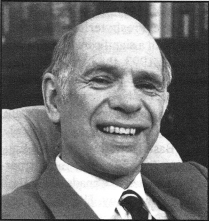
 A searchable, downloadable PDF of the original article appears below. The Revd. Dr. Michael Green served as Professor of Evangelism at Regent College from 1987 to 1992. He is now an Advisor on Evangelism to the Archbishops of Canterbury and York and lives near Nottingham, England.
If the leaders of local churches are really serious about liberating the lay people in the congregation for the difficult, challenging, and yet intensely rewarding task of spreading the good news in their neighbourhood, there seem to be a number of important steps to take.1
They must get the vision
One of the most fundamental of all New Testament truths for the church is this: all, not some, are called to be its ministers. There is no two class travel for passengers on the Christian train: class one for pastors, and class two for the rest. The New Testament knows of no Christians who are not ministers and witnesses. The worship of God and the witness to the world are both the prerogative and the responsibility of the whole church. Anybody moderately at home in the literature of the New Testament knows this to be the case. It is beyond dispute. And yet almost every branch of the Christian church, whatever their denomination and theoretical beliefs, has made precisely that division, between pastor and people. As a result the congregations, no matter what their denomination, are instinctively persuaded that evangelism, along with other ‘church’ activities, is the job of pastors: “This, after all, is what we pay them for.”
That attitude is fatal to dynamic Christianity. And pastors must realize it. If they want to go it alone, alone they will be. And the neighbourhood will not be evangelized. They have to understand and passionately believe that the spreading of the good news is the task of all the members of the congregation.
They must teach the people
They will not succeed in breaking down the entrenched attitudes of their congregations overnight. It will require painstaking, persistent teaching. Teaching about the calling of all Christians to be witnesses to their friends about Jesus. Teaching about the need of people for the Saviour. Teaching about the privilege of being his ambassadors. Teaching about the importance of relationships, so that church people do not form a ghetto but are out in society like yeast or salt. This will, in turn, prove costly to the church. It will be hard for ministers to encourage it, because it will mean that some of the most gifted of their congregations will see their calling more in the board room or the labour union, more in the sports club or the community centre, than in internally-related church activities. But you can only evangelize friends. And friendships need to be built up and cultivated. It is for lack of them that so many earnest Christian invitations to Christian events fall on deaf ears.
Part of the teaching role of the pastor will be to make a clear distinction between the calling of all Christians to be witnesses and the gifting of some to be evangelists. We all have a story to tell: the story of God’s dealings with us, and how he became real to us in the first instance. We ought all to be able to give an account of the hope that is in us, so Peter tells us (1 Pet. 3:15). And that is an extremely important function. We may not be able to argue the truth of the faith. We may not be very sure of its content. But if we can say with simple confidence, “Jesus Christ is alive, and I know him,” that has an enormous power. For, while your arguments may be rebutted, nobody can deny your experience. And if you are willing humbly to share it when opportunity offers, it will often challenge, intrigue, irritate until your friend decides he or she must look into the matter more closely. And that is when he or she is most in danger from the heavenly Fisherman!
But though all are called to give their story, not all are equipped by God to be evangelists. The talent to explain the way to faith convincingly and clearly, the talent to precipitate decision for Christ, is one of the gifts of the ascended Christ, and it is not given to everyone. But it is given to some. The statisticians reckon that something like 1 in 14 of a congregation has the gift of an evangelist. Of course, they may have no idea that they have such a gift. It is your job, if you are the leader in the church, to teach the existence of such gifts (Ephesians 4:11 puts the matter very plainly), and to look out for those who may be gifted in this way without knowing it. Usually it will become fairly obvious, given encouragement from yourself.
The budding evangelist will often be bringing people to church. He or she will feel very much at home in the company of nonChristians and not in the least embarrassed about being known as a believer – laughing off the jeers and cheerfully accepting the taunts while remaining friends with the mockers! There is your natural evangelist. Generally it is someone who really likes people and is never happier than when in their company. But God is never dull and monolithic. There is no one personality type which can be labelled ‘evangelistic.’ Some Christians live very quiet lives, but there is something about them which prompts others to ask them questions, to which they can respond effectively. Sometimes people do ask, “What is it you’ve got which I haven’t?”, “I can’t understand how you can be so cheerful on a Monday morning,” or, as once happened to me, the dentist’s assistant might just say, “How is it that you seem to be happy all the time, even when you get out from the dentist’s chair?” Opportunities like this come occasionally to most of us. Frequently we fail to make anything of them. But they come most often to a person whose life exudes an aroma of Christ, and such a person can draw others to the Lord with a minimum of explanation and argument. He or she acts as a sort of conductor for the electricity of God. It gets through. And the friend is drawn to the source of that power, Jesus Christ himself.
They must give the training
It is one thing to begin to discover in the congregation a number of people who might have the gifts of an evangelist. It is quite another to set them on their way. For this they need training. And they will rightly expect you, as the professional pastor, to provide it.
There are various ways in which this can be done. The pastor can announce that he or she is going to offer a course on how one individual can help another to begin a friendship with Jesus Christ. The pastor can either make up his/her own course, or derive one from books and experience. There is much wisdom in Leighton Ford’s Good News is for Sharing (Elgin, IL: D.C. Cook, 1977). Evangelism Explosion by James Kennedy (Wheaton, IL: Tyndale, 1977) is a well-tried method, particularly effective in the U.S.A. How to Give Away Your Faith by Paul Little (Downers Grove, IL: InterVarsity Press, 1966) is excellent. Others would advocate Bill Bright’s Witnessing Without Fear (San Bernardino, CA: Here’s Life Publishers, 1987) or Robert Coleman’s The Master Plan of Evangelism (Westwood, NJ: Fleming H. Revell, 1964). It is a great mistake to adopt any of these without making sure that it is suitable for the situation in which you find yourself. I find it better, therefore, to create a course myself which is really geared to members of our church and to their understanding and background. Subjects handled would include the mindset of modem people who are indifferent to God; the need of people for the gospel; the person of Jesus and what he has done for humankind through his incarnation, death and resurrection; the way to personal encounter with Christ through repentance, faith and, when appropriate, baptism; the common objections that are met with; the grounds for Christian assurance; and the first steps in Christian growth. Part of the program should be a deliberate attempt by each member to lead one of his or her friends to Christ during the course of the weeks immediately following.
Another, much more devastating way of going about it, which may be suitable for brave spirits, especially among young people, would be to give them the minimum of verbal training, but apprentice them by going out on the streets. You would go out in two’s armed with a questionnaire, and ask passers by if you might ask them a few questions. One might be, “Are you a regular worshipper at any church?” leading on to, “Who do you believe Jesus Christ to have been?” which in turn could give way to some such question as, “If it were possible to meet him, would you want to?” Questions like these, if asked with due sensitivity, can start up really good conversations then and there on the street with complete strangers. The whole experience is a baptism of fire for the couples as they go out, but they learn no end from it. There is the added advantage of showing that Christians care enough to get out of their buildings and out on the streets. The couples then retire to the church, pray, share experiences and learn from their mistakes.
A third way of training would be to make use of a video. There are one or two videos specially designed to help people in sharing their faith. The video is only part of the weekly session, and is complemented by role play, discussion and practical experience. An excellent training video called Person to Person has been produced in U.K. by the somewhat unlikely coalition of Scripture Union, Campus Crusade and the Bible Society. This widely acclaimed video has won a national award.2
But perhaps the best of all ways of training is by apprenticeship. I have on a number of occasions had someone bring a friend to me who was on the point of commitment to Christ, and ask me to take that friend further. I have done so, and done it in the company of my ‘apprenticeship.’ In this way such a person is able to participate at the point of commitment of a friend with whom they have been closely connected, and has a practical demonstration of how to help an enquirer over that last hurdle or two into faith.
They must model the role
It is a fairly basic principle of leadership that you cannot lead anyone further than you yourself have gotten. Evangelism does not happen in a great many churches for the simple reason that it is not stressed by the pastor and, worse still, he or she is not seen to do it. If you are expecting to see a congregation come alive in sharing the good news, then it stands to reason that the leader must be deeply committed to it. One does not need to be very good at it. But one does need to have a go at it. And before long others will emerge whom God has gifted more richly in evangelism.
I think of a mission I had the privilege of leading with a team of Oxford students in Britain. It was a city-wide campaign for two weeks in the northern town of Huddersfield. Near the heart of the town there was a marvellous open air space designed rather like a theatre where events could take place and onlookers sit or stand on the steps, with shops and shoppers behind them. We did open air ministry at lunchtime there each day, using poetry and song, drama and movement, testimony and preaching. It usually fell to me to draw things to a conclusion, and we had the joy of seeing a trickle of people coming to Christian commitment there and then as they sat on the steps, talking and then praying, with one of our team. One day I could not take part: I had to speak to the town councillors. So I asked one of the drama team – a senior Oxford student who had been there every day – to close the meeting with a challenge. When I got back I found the students buzzing with the fact that half a dozen people had committed their lives to Christ as a result of my friend’s final challenge. I told him that he was much better at it than I, and that he would be doing it for the rest of the campaign. God had given him greater gifts than I had for such ministry; but he would never have realized it had not I, as the leader of the church, been prepared to lead the way – and then to step aside as a more gifted person emerged. That is the task of modelling.
It is the same with evangelistic preaching in church. Leaders must be prepared to do it, even if they are not particularly talented at it. They must, like Timothy in the New Testament, “do the work of an evangelist” (2 Tim. 4:5) even though they are not Paul. They must also be prepared for others to do it instead of them. And it takes a good deal of courage and humility for a pastor to do those two things. Courage, because once you start preaching for decision in church noses get put out of joint (and they might be the noses of the well-heeled!). And humility, because for the pastor to stand aside and let a layperson who is a talented evangelist loose in the congregation is, to say the least, unusual. But it is unquestionably the way to grow evangelists in your church, evangelists who will be able to affect the neighbourhood.
They must share the task
From modelling we have already strayed into sharing. It is hard to keep the two apart. For once you begin to practise what you preach, people in the congregation will take note, and those with the love for evangelism will gather round you and want to be involved. It proved to be just like that when I was teaching at Regent College where I was asked to lead a three-day mission in a nearby university. I did, and took thirty or so of my class with me. We operated in the great hall of the university, in the square, round which much of it was built, in the dormitories, at lunchtime and evening meetings, and at a late night cabaret-style function. The result was that all our team shared in the ministry, and helped to reap the considerable fruit. All returned back to Regent College on fire for God, and thrilled to have seen him so clearly at work in changing other lives. And students who had never seen themselves as evangelists began to discover that God had indeed given them that gift.
I think of a congregation I helped to found in Vancouver. There was a church there already, but its congregation was very formal, very old and very small. Attempts to get others to come in and stay in such a worshipping community were conspicuously unsuccessful. We decided to start a new congregation at 9 o’clock in the morning, and a small team of us went visiting in the community for that purpose. I had the privilege of preaching evangelistically for five successive weeks to the heterogeneous collection of people who, marvellous to relate, turned up at that unearthly hour of a Sunday morning. But it was a shared enterprise. Some of us visited and brought people to the service. Some shared an extensive time of prayer beforehand. Some provided a small orchestra and visuals for the overhead projector. Some gave testimony to what Christ had done in their lives. And some talked personally to people who wanted to make Christ their own Lord. It was a shared enterprise, and it has grown now into a very viable and lively congregation.
So important do I believe this principle of sharing to be that I rarely accept invitations on my own these days. I try to take a team with me, large or small. It may be over 100; it may be two or three. The principle is the same in either case. And the principle is that once reconciled with God we are reconciled into a Body. And in evangelism we need not only to proclaim that reconciliation, but to exhibit it by partnership and the quality of our mutual relationships in the team. In this way the unspoken message which comes across from the team reinforces the thrust of the words they speak. And each member of the team grows from being part of a shared enterprise like this.
I think I discovered its importance very early on in my ministry. When, as a new pastor in my first job, I began to be asked out to speak at surrounding youth groups, I used to take a few of our own youth group with me. We would pray about the engagement first, and plan what part each would take in it. I found myself less and less of a solo performer, and more and more of a ringmaster, orchestrating the contributions of others in the team. I think we may have done some good where we went. We certainly found the team growing by leaps and bounds. Our Lord did not select solo performers; he chose a team of twelve disciples. We would be wise to emulate his example. In that way there is every reason to hope that the church as a living body will indeed be a continuing evangelistic agency in the neighbourhood with a natural and unselfconscious enthusiasm.
They must provide the occasion
As the church becomes more at ease in the realm of evangelism, opportunities will grow. The pastors will be asked elsewhere to speak about the subject, or to conduct some mission or outreach. And what they need to do is not to run themselves ragged by responding positively to every invitation, but provide occasions for others in their congregation to go instead. There is a delicate moment when, if you try to do this, you fear it won’t work. You reply that you cannot go, but that you would like to recommend So-and-So. They do not take up your suggestion! But persevere. After awhile you will have got yourself into the position when you will be trusted when you say, “Don’t take me; take my friend.” Somebody will. And you will be over the hurdle.
I can recall in a previous parish a delightful, cautious, gentle doctor. He was a very good doctor, and he was very dubious indeed about evangelism. I managed to persuade him to come on some team I was taking out. He came, and came again, and again. Now he not only takes teams all over the country as opportunity offers and as his time allows, but he organizes the whole outreach ministry of that church. I drew him in, then provided the occasion for him to lead, and now he provides the occasion of others to take. And so the good infection grows.
You do not have to wait for invitations to come in. Once some of your own congregation have got the bit between their teeth, why not suggest the visit of your team to a nearby church? I always feel this is a ‘no-lose’ situation. If your team does well, they return home thrilled, and the receiving congregation is glad to have had some down-to-earth lay people ministering to them instead of the usual pastor! They may well be spurred to do something similar themselves. If your team is all a bit shaky and hesitant, and does not do very well, the same result is usually achieved. The receiving congregation may say, “Huh, we could have done better than that,” and they take an opportunity to go and improve on what they have seen! I think of a mission I led with a team from a previous church into one of the large residential country villages in southern England. It so happened, in the providence of God, that this church was poised on the edge of renewal. We happened to come at just the right time. The result was a marvellous weekend in which many people came to Christ, and folk from our own team who had never had the joy of introducing anyone to Jesus discovered it then. The next weekend people who had come to faith crowded up into the pulpit of the receiving congregation to bear testimony to what God had done in their lives. And before long that village was itself sending out teams of enthusiastic and very amateur witnesses into the surrounding countryside.
They must furnish the encouragement
Evangelism can be demanding and exhausting. Those who engage in it can easily become burnt out. Some of the most active evangelists these days are workers with parachurch movements, and I honour them for their courage and initiative. Yet I have to say that at Regent College, where I worked, we had a steady stream of burnt out workers who had left their organizations feeling rather battered. They had been expected to do primary evangelization by visiting strangers for eight hours a day, and had not received a great deal of encouragement. The result was that for some of them, evangelism was emphatically not something they wanted to hear about! We all need encouragement, and never more than when we are engaged in the difficult task of seeking lovingly to change the whole direction of a life, to bring it back to its proper source and goal in God.
That is why those who are most engaged in evangelism in the neighbourhood should be especially well cared for – with acts of thoughtfulness, the occasional gift, or a ‘fun’ happening where all they are expected to do is to relax and enjoy it. If this loving care is exercised, the budding gifts of young evangelists will have the chance to develop without being frozen off in the sharp frost of overuse. If it is not, you will soon be looking for a fresh young evangelist.
There are two or three obvious other ways in which young evangelists can be encouraged. In England there are annual get-togethers of those engaged in extensive evangelism. To attend a meeting like this among like-minded peers could be a tremendous encouragement. In North America there are other means of gaining input. Conferences by men like Billy Graham and members of his team, Leighton Ford, John Wimber and others are an occasional treat, and an opportunity to be refreshed, to gain fresh ideas, and to meet with like-minded people. Another extremely encouraging thing is to be allowed to share in the nurture of new believers. I am strongly convinced of the value of Discovery Groups, or whatever you care to call them. These are short courses of, say, eight weeks, expressly designed for new converts and those on the edge of commitment. To lead one of these is one of the joys of my life. And I never count it a greater privilege than when I have been the human instrument through whom some of the members came to faith. If you want to stretch and at the same time greatly encourage a young evangelist, put him or her in a small team leading a Discovery Group.
This is not the place to enlarge on the contents of such a group; suffice it to say that the new believer has particularly pressing needs which cry out for attention. Without that attention and tender loving care, the evangelistic outreach of the church into the neighbourhood will grind to a halt. There will be a good many professions of conversion, maybe, but few people will be added to the church and become real disciples. It is vital for all who engage in evangelism to realize that Jesus is interested in disciples, not decisions. And the best initial steps that I know towards building that tentative commitment into sturdy discipleship are discovered in a small group for new Christians. The new believer needs to be clear on the step he or she has taken, the grounds for Christian assurance, the means of growing in the spiritual life, how to handle temptation, the church, the Holy Spirit, and something about Christian service. They need to find out about fellowship as they encounter it in one another in the group. They need to learn to pray, and to pick verses from Scripture to feed on. It is nothing less than a whole new life for them, and they need all the help they can get. It is an enormous privilege as an evangelist to be allowed from time to time to engage in the leadership of such a group. The growth that happens in those first two months is often staggering, and if there is anything calculated to put a fresh spring back into the step of a young evangelist, it is this.
They must exude the faith
What is the main difference between a new swimmer and an experienced one? Or between a fledgling bird learning to fly and the parent bird? It is simply this: confidence. And confidence makes all the difference in evangelism. When I began, I was so amazed that God should use human beings in partnership with himself to kindle new life in others, that I was sometimes very tentative in laying the issues on the line. I think I was terrified that if I was too clear and decisive nobody might respond, and I might look like a fool or a failure. I guess I am not alone in that unworthy sentiment! What is more, Western culture is so pluralist that we fight shy of making absolute claims for Jesus. It is, on the surface at least, so polite that we feel it is almost discourteous to put the knife in and challenge people to repent and believe. Yet that is what Jesus did. He called people to leave their old way of life, then and there, and to follow him. What is more, to do it openly. If we are faithful to him we will do the same. And we will find, with experience, that God honours this holy, loving boldness.
There ought to be nothing raucous or condemnatory about our challenge and appeal. We should simply put the alternatives on the line and challenge people in the name of Jesus to make the decision they know they ought to – when they are ready, and not before. We will very often see fruit, fruit that sometimes will amaze us. And when we do not, we will learn, like the farmer, to wait for the good seed to germinate, confident in the God of nature and the God of grace that it will. His word will not return to him void. It never does. And the older I get the more traces I am allowed to come across of where people to whom I had proclaimed the good news in the past had come to faith even though I never knew it.
This evangelism is God’s work. God is the evangelist. It is his word that creates new life once sown in the soil of human hearts. It is his Spirit who convicts of sin, makes Jesus glorious in the eye of the enquirer, and brings him or her to new birth and assurance that God is his or her Abba, Father. None of us can do it. But in evangelism we are privileged to cooperate with God. We must make sure that we do so on his terms. It is his peace initiative which we hold out to rebel hearts. We have no right to change those conditions of repentance, faith, commitment and baptism into the body of Christ which he laid down. And curiously enough, most people prefer such a challenge to some milk and water message which they know in their bones is short-selling them. If neighbourhood evangelism is to take off, it will never do so on some half-baked gospel. Only the authentic bread of New Testament Christianity will feed hungry stomachs, and we must have no truck with a pusillanimous approach.
It has struck me – and this is especially the case in North America – that we need to get back to the plain, common-sense directness of Jesus and the apostles. There is a tendency in American circles to rant and rave about the gospel. That is not required of us. There is a tendency in Canada to walk round the gospel like an Indian in moccasins, terrified of putting anyone off or suggesting that one way is better than another! Let us go for the happy mean, the biblical mean, of a confident, warm, direct presentation of the good news. We have nothing to be embarrassed about. The Lord has visited his people, estranged though we were by our innate self-centredness. He has come in person. He has dealt with the human predicament at its tap root, by absorbing our guilt and wickedness into his own person on that terrible cross. He was victorious in that ultimate battle. The grave could not hold him. He is alive. He can be met. And we have met him, and want to share that relationship with others. How could anyone be ashamed of such outstanding good news? How could anyone water it down until it fitted in with the everchanging climate of the age? No. We have every reason for confidence in the gospel.
When that confidence is deeply rooted in our soul, several things happen. As we preach there is a note of authority (not authoritarianism), the authority of truth. As we preach, young evangelists are encouraged by the power of the word of God and the impact it makes on the attention and lives of the hearers. As we preach, men and women begin their journey back to God. And what greater privilege could we have than that? One of our great needs today, not least in Canada, is an army of men and women who have such confidence in Christ and his good news that they are able to exude that faith as they speak and live their daily lives. Then we shall see a whole new generation of younger evangelists cropping up in church after church, who will make a significant influence on their neighbourhoods for God.
Endnotes
- The copyright for this article rests with the author and is used with permission. It was first published in R. Paul Stevens, ed., The Equipper’s Guide to Every-Member Ministry (InterVarsity Press, Downers Grove, IL, 1992): 113-125.
- Person to Person may be rented or purchased from P.O. Box 240, Swindon, England SN5 7HA.