COVER PHOTO: courtesy of designpic.com. This photo shows a chess game, where winners and losers are made. This issue deals with politics and Presbyterian involvement.
ARTICLES
REVIEW
A publication of the Renewal Fellowship
A publication of the Renewal Fellowship

COVER PHOTO: courtesy of designpic.com. This photo shows a chess game, where winners and losers are made. This issue deals with politics and Presbyterian involvement.
ARTICLES
REVIEW
By Calvin Brown. Throughout the centuries there has always been an interplay between politics and religion and between the spiritual and the secular. Basically, there have been four positions that the church has held at different times and different places in regards to church-state relations. … Read more
By Bruce Clemenger. The debate about the relationship between church and state has been reignited. Firstly, we should respond to the misperceptions that are rooted in stereotypes, misunderstanding, or bias, and secondly, it is an opportunity to discuss the relationship between church and state. … Read more
By Stephen Allen. The challenge for the religious community is to nurture public places of moral deliberation, but we do so in a post-modern, secular Canadian society and a society comprised of many faiths and cultures. Profound cultural shifts have taken in place in Canada in a short period of time. … Read more
By Mariano DiGangi. The vibrant echoes of the Barmen Declaration of 1934 made its impact on Canadian theologians. In 1954, after an enlarged committee had been formed to produce a statement of faith expressive of the Lordship of Christ, the Declaration of Faith Concerning Church and Nation took its final form. … Read more
By Peter Bush. Presbyterians believe that the church is to be free from state interference, but how involved can a Presbyterian be in the political scene and remain free to act as the conscience of the state? This article explores some of the ways Canadian Presbyterians have been involved in the Canadian political sphere. … Read more

By Judy McCallum. Events in Sudan have forced Canadians to consider the ethics of business involvement in a country undergoing civil war and what the responsibility of Canadians might be when we are linked to war in another country. How — or should — we be involved? … Read more
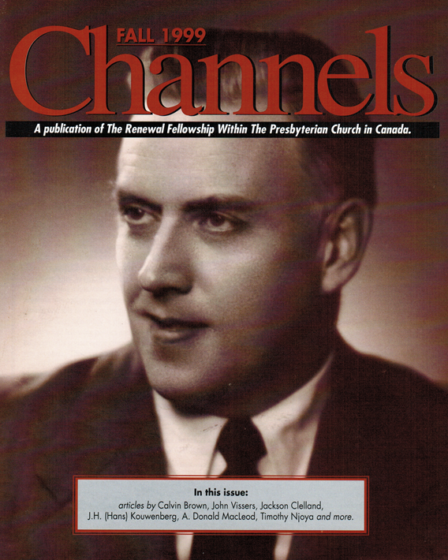
By Timothy Njoya. For twenty years, the author has been persecuted by the Kenyan government's killer machine because his faith was giving birth to democratic political longings. He suffered beatings, cuts, broken bones, and imprisonment, twice experiencing resurrections from a coma. … Read more
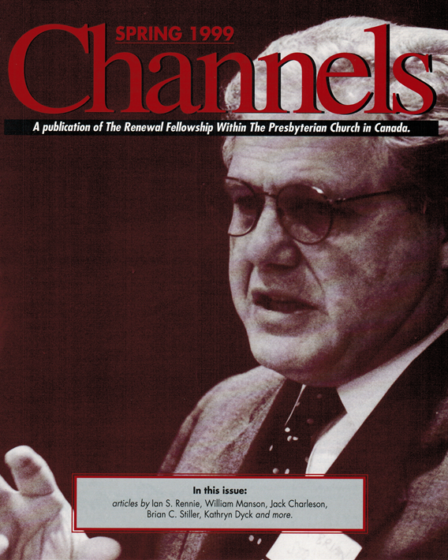
By Jack Charleson. The interests of Canada can be promoted best when each person in the country is prepared to identify the role they must play to ensure the world can be a better place when influenced by Canadian society. Unity begins with individuals. … Read more
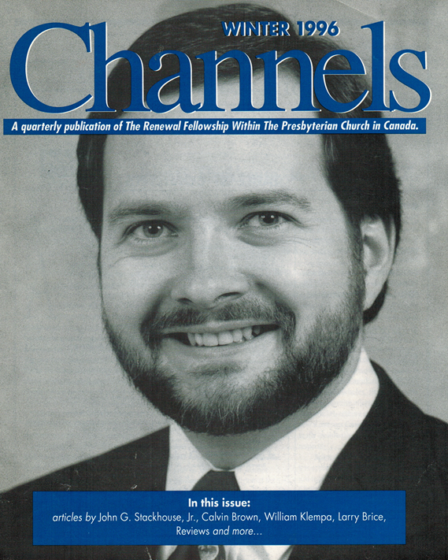
By John G. Stackhouse, Jr., pictured on the cover. Canadian Christians sometimes look back with nostalgia to when Christianity was dominant in the country. "God" is in the national anthem. Is Canada a Christian nation? Is it more or less Christian today than previously? … Read more

By David Jennings. The PCC’s well-intentioned Sexual Abuse and Harassment Policy forsakes natural justice for a heartfelt concern for alleged victims. But the admission of institutional bias will allow a secular court to overturn any determination of guilt made by a PCC court. … Read more

Reviewed by David Jennings. Until Christians start speaking in the public square, they cannot criticize anyone for not listening. … Read more

Reviewed by Mark Vander Vennen. This book seeks to be an evangelical response to the Catholic bishops’ substantial pastoral letter, “The Challenge of Peace: God’s Promise and Our Response”. Frequently the several entries under each heading represent different, even opposite, positions on the arms race. … Read more

Reviewed by Alan Hartley. The book is dedicated “to all those who have said: ‘Here I stand’, facing oppressive authoritarian civil and church power.” This manifesto is meant to create opposition to the breakdown of Christian values in American society. Restitution of the balance between order and freedom will require active involvement by Christians in society. … Read more

By J. Barry Forsyth. Do you think the Church should take a stand on political issues? In recent years, the World Council of Churches has been embroiled in controversy over the fact that it supported (directly or by implication) Robert Mugabe’s guerrillas of Zimbabwe against the white “racist” government of Ian Smith. Were they right or were they wrong to do that? … Read more