 A searchable, downloadable PDF of the original article appears below. Peter H. Davids is an Adjunct Professor of New Testament at Regent College, Vancouver, B.C. This article is based upon (1) attendance at two of John Wimber’s conferences (including listening to tapes of all of the workshop sessions), (2) reading both of his books in manuscript or in printed form, (3) personal knowledge of some of his associates, and (4) listening to well over 100 tapes by him and his associates. The author has also observed the application of Wimber’s teaching in several church situations.
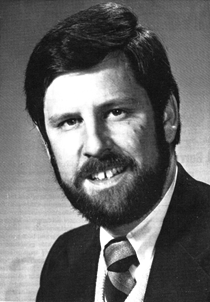
“John [Wimber] is a large, lovable, warm and gentle person, reminding me of a favourite teddy-bear. He also has an able mind, wide Christian experience and shrewd spiritual discernment,” wrote his friend David Watson in Fear No Evil. He is indeed pleasant, friendly, and unassuming, even disarmingly humble. He has only a limited formal education (Bible college), but before he went to college he was already leading some 11 Bible studies composed mostly of his own converts, and afterwards he had a highly successful ministry as an evangelical Quaker pastor. (Wimber’s education is similar to that of the pastors of many large churches. Unlike some of them Wimber has the humility and wisdom to learn from scholars in fields in which he feels a lack of expertise. He hires researchers and farms his material out to scholars for criticism, as well as uses scholarly materials when he discovers them.) He became disillusioned with his ministry not because it was not highly successful in traditional terms, but because he came to see that the church often plays church rather than ministers Christ to the world. He left this pastorate for the Charles E. Fuller Institute of Church Growth where he helped many churches as a consultant. (Wimber is apparently self-educated in church growth, but his expertise in the field is evident. He developed much of the work of the Charles E. Fuller Institute of Church Growth, and he has earned the respect of professional colleagues in the School of World Mission. In this respect his education parallels that of Prof. F.F. Bruce in biblical studies [who has no formal education in the field].) Later he returned to the pastorate as pastor of the Vineyard Christian Fellowship in Yorba Linda and continued as adjunct faculty at Fuller Theological Seminary’s School of World Mission. Nothing in this history explains the strong emotions Wimber raises.
Theologically there is nothing exceptional in John Wimber’s teaching. On the one hand, he shares the mild Calvinism common in conservative evangelical circles. (While some have argued that Wimber is Arminian or even Pelagian, this is hardly the case. For example, Wimber clearly believes in eternal security [the general evangelical way of stating the perseverance of the saints] and God’s initiative in salvation [which is what power evangelism is all about with its concept of “divine encounter”]. While he does take human and demonic rebellion against God seriously [the battle between the Kingdom of God and Satan is real with real casualties], he has no doubt of the ultimate outcome because of God’s sovereignty. He does maintain a tension between human will [in obeying God in preaching the gospel, healing, and holiness] and divine sovereignty, never fully resolving this antinomy [although it is clear that God will get his way: the issue for humans is whether they will cooperate and be blessed in the process or refuse to cooperate and experience judgment in the process]. Of course he approaches all of these issues as a pastor, not a systematic theologian, so he does not feel obliged to tie up all the loose ends. That also makes it necessary to draw his beliefs from large amounts material, not a single statement or even a single conference.) On the other, he is heavily dependent upon the New Testament theology of G.E. Ladd and the works of J.D.G. Dunn on the Spirit. While these are the most evident sources of Wimber’s New Testament theology, he draws from a wide variety of other works as well. An evangelical Presbyterian leader such as Don Williams, who knows Wimber well, finds his teachings fit very comfortably into the tradition of his denomination. Again there is nothing here to disturb or excite people. What makes John Wimber more than just another pastor of a large Southern Californian church (if one well-educated in church growth)?
The main thing that John Wimber does differently is that he insists on practising what he reads in the New Testament – all of it, including the miraculous. And he leads others into this same practice. His practice is balanced, including evangelism and care for the poor right along with signs and wonders, but the fact that he expects God to speak and act just as in the New Testament marks him out as different. And since he bases this practice on the same theology with which many evangelical pastors were trained (rather than a foreign Pentecostal theology), his teaching demands an immediate reaction. In this he is not different than others who identify with the so-called Third Wave (e.g. C. Peter Wagner, John White, Don Williams), but since Wimber is so visible in his conferences and seeks to train as many as possible in his practices, he has beome the “point man” of this movement. (The Third Wave is so named because it is seen as the third wave of the Spirit in this century after the Pentecostal movement of the beginning of this century and the Charismatic Movement of the 60’s. One of its more interesting characteristics is that it finds a lot of its inspiration in the work of the Spirit in the Third World, and thus is in part a gift to North America from the missions environment. That is one reason why Wimber fits in so well with Fuller’s School of World Mission [rather than, e.g. its School of Theology].) It is easier to attack him than, say, Professor Wagner, although in substance there may be no significant differences.
There are further reasons why some people find John Wimber offensive. The first is fear of hurt. No one comes to ministry or biblical study without a background, good or bad. When it come to the phenomena of the Spirit, one often comes with a negative background of experiences which frightened or hurt one, either personally or corporately. Even if John White can fully document that all the phenomena observed during Wimber’s conferences also occurred during the revivals of Jonathan Edwards, John Wesley, and others of their period (often with the same negative reaction from their fellow church leaders), that is remote or overlooked data. (These notes, from the Church Growth Leadership Conference in Anaheim, CA, Feb. 20,1986, which abound with quotations of primary sources, and the address based on them arose out of a year of intensive observation of both the Anaheim Vineyard Christian Fellowship and Wimber’s conferences, especially those in England. For a classical defense of similar phenomena [with which Wimber would likely agree] see Jonathan Edwards, A Treatise on the Religious Affections. Naturally, since many of these phenomena include some emotional expression, those who are uncomfortable culturally or personally with emotional expression [especially with that expression in religious contexts] are likely to feel uncomfortable with Wimber. But this is precisely the critique aimed at Edwards, and it reveals more of an issue between the person and his or her emotions than an issue between the person and Wimber.) The fact is that “I” have experienced personal trauma or conflict in “my” church due to some similar move of the Spirit (either genuine or imitated), and thus have an automatic negative reaction to what “I” see similar in Wimber.
This response is quite understandable, and Wimber himself in his writings points out that he, too, was turned off from being open to the supernatural works of the Spirit as the result of negative experiences. Most models of this ministry are either inaccessible to the average Christian (e.g. the “great healer” model) or else repulsive (e.g. the financial manipulation of some healers; the damage done to some persons by others who argued that their loved-one died because they lacked faith). We admit to this, but do not believe that this is a reason to reject Wimber and what he represents. It is instead a call to reconciliation with our own pasts and to growth beyond them.
The second is cultural clash. John Wimber is a Southern Californian. He often comes with a team from that area. His language and style is that of Southern California. Furthermore, he ministers to a particular sub-group of that area, the “Baby Boom Generation”, and this conditions his style still more. (I take this terminology from Christian Life Magazine, but one could also use “rock generation” as does C. Peter Wagner, Leading Your Church to Growth [Glendale, CA: Regal Books, 1984], pp. 177-178, who cites the Anaheim Vineyard Christian Fellowship as an example of a fine ministry to this sub-culture. That is the reason why churches in Canada with a similar target group have often found Wimber’s music and worship style very useful, although we recognize that other churches with different targets could not utilize it effectively.) Wimber makes no apology for this fact. As he explains it, when he comes he simply shares out of what he has learned. For example, worship is a top priority for him, so he makes it a priority in all of his conferences. But he worships using contemporary music, most of it written by members of his own church. Since he is sharing himself, his own life, his conferences also utilize this same music. While he recognizes other styles of worship and music, it would not be authentic for him to use them, for they are foreign to him. So long as this is recognized, it should be no issue that he uses his own music. Nor should it be an issue that he is somewhat flamboyant in his language or uses terms and expressions common in Southern California (although not necessarily with the same meanings the secular world of that area would put on them). This is not the substance of his message, but the clothing it comes in, just as a group from India or Indonesia or Africa or Russia would come with culturally foreign language and style.
But some people cannot adjust to this cultural clash, which is certainly not “Canadian” (even in not-so-conservative Vancouver). The language is perceived as “hype”, the music is viewed as foreign, and the terminology is found offensive. It may be our Canadian defensiveness over against the USA in general and Southern California in particular, but the fact is that some people find it more difficult to extend the same cross-cultural tolerance to Wimber that they would to Christian leaders from other foreign countries. This is unforturnate, and it is a problem in the observer, not one in Wimber. For those who are able to make the cultural translation, his teaching has been found useful in all types of contexts, from Anglican and Presbyterian to Pentecostal and Independent. It would be a deep loss if we let our own cultural preferences keep us from the same benefit. (I have noted above that C. Peter Wagner, a Congregationalist, and Don Williams, a United Presbyterian, could both apply “Third Wave” ideas in their own contexts. I have also seen leading evangelical Anglicans, Southern Baptists, and others who demonstrated that cultural translation was possible to situations as different as their respective traditions and such geographically distinct areas as New York City, suburban Virginia, and Texas.)
The main thing that John Wimber does differently is that he insists on practising what he reads in the New Testament – all of it, including the miraculous.
The third is his willingness to use and accept less than perfect coworkers. For John Wimber his conferences are training events in two ways. First, ordinary people from his church pay their own way to come to such events as a team. While they have substantial training, they are by no means polished. The conference is an opportunity for them to stretch and learn. But Wimber knows full well that they will make mistakes. Furthermore, by the end of his conferences he has anyone attending who is willing also participating in ministry. That is precisely his goal: to pass on his ministry to all who will receive it. Yet these folk are even more likely than the team to make mistakes. For Wimber such a situation is not only permissible, but necessary. Lectures in theory will not teach a person to do anything. Only by trying a skill and failing and then trying again and succeeding does one learn. A great preacher has preached many sermons which flopped before he becomes skillful. Thus in his conferences (and in his church) Wimber tries to set up a permissive environment where failure is allowed. This encourages the person to step out in obedience to Christ and take risks (i.e. exercise faith). But such a procedure, while pedagogically sound, is “messy”. And to keep the permissive environment, he rarely publicly corrects people (although in private team members do receive guidance). People who fail to see this as a necessary teaching procedure will at times be offended.
Furthermore, ministry at Wimber’s conferences is public. He wants this, for to be teaching events people must see what is happening. At his church most ministry is done during the week in homes or after the service in counselling rooms. But that cannot be the norm in a teaching conference (although he does quickly remove people for private ministry if a demon manifests). This public demonstration offends some people; others realize that they are getting just what they came for, a learning experience that goes beyond theory and demonstrates the practical application of what is taught. As a pedagogical tool, it is excellent. (Fuller Theological Seminary has recently suspended the MC510 “Signs, Wonders, and Church Growth” course due to conflict between the School of World Mission and the School of Theology faculty over the course. A major issue in this debate was whether healing should be demonstrated in class or only talked about in class. Many students perceptively observed that talking about healing without demonstrating it made as much pedagogical sense as talking about preaching without ever asking a person to preach a sermon.)
The fourth is his acceptance of ambiguity. Anyone familiar with G.E. Ladd’s A Theology of the New Testament is also familiar with ambiguity, particularly the terms “already but not yet”. This sense of ambiguity pervades John Wimber, but many fault him for it. A few examples should make this clear.
(1) The universal testimony of the New Testament is that God is on the side of healing. The only authorization the church is given in the face of sickness is to pray for healing (e.g. Jas. 5:14-16). Jesus, in whom the will of God was perfectly revealed, healed. Wimber notes this and thus teaches that we should pray for healing, for this is an expression of the Kingdom. In fact, one of his major tasks in some conferences is to persuade people that this is true and that God might well use them in healing others. Yet he also knows that while the Kingdom came in Jesus and is expressed in his church, the Kingdom is not yet fully present and will not be until the parousia. Thus while Wimber encourages people to pray for healing and expect miracles, telling stories of the ones he has seen (and he has new stories each time he speaks, as a study of his tapes reveals), he can also talk about the people who were not healed and eventually died (his own mother and his best friend David Watson are his prime examples). Some may read this as inconsistency; I should rather say that it is New Testament realism. It stresses the “already” to push us to obedience, but it points to the “not yet” to keep us from a false triumphalism and concomitant disillusionment.
(2) The New Testament teaches us that the church is God’s bride whom he loves, yet it can be critical of the church at the same time (e.g. Revelation or Galatians). Wimber likewise is committed to the church, loving the whole of it. He can and has worshipped in most types of denominations in Christendom, and he will pass on what he knows to anyone. Yet Wimber is also critical of the church. As a reformer he sees imperfections, and he calls the church to a renewed obedience and purity. (What first impressed me about John Wimber was noting that when several pastors I knew well went to one of his conferences they came back talking not about miracles [although they mentioned some incidentally], but about their repentance for sins in their lives which were exposed. Holiness is a very central part of Wimber’s concern for the church.) This is the nature of any renewal movement. For it to be genuine renewal, both the love and the criticism must be there. A love which did not include criticism would never reform the church; and criticism which did not include love would be harsh and condemning, unlike God. Wimber preserves the tension.
(3) The New Testament recognizes that renewal agents should be committed to the church, yet the scripture as a whole is clear that renewal agents are often expelled from the church and have to put their “new wine” into “new wineskins”. Again Wimber picks up on this tension. He strongly encourages people to stay in the churches in which they presently are. Acting consistently with this message he refuses to take into his Vineyard Christian Fellowships most who apply. At some of his conferences he has people from other denominations give major addresses to show some who stayed where they were. And he instructs people how to introduce change with a minimum of disruption in a fellowship. In other words, he is for renewal, not revolution.
But can anyone realistically expect that this will be possible in every case? Surely the Bible is full of examples that those who were God’s agents of renewal were often rejected by religious authorities, the leaders of God’s people. Even Paul was once forced to withdraw from Corinth when he tried to correct some errors. Sociology points out to us that while many churches have enough radicals, progressives, and conservatives (here defined as those disposed to maintain existing conditions, but who can be persuaded to change through rational argument) to accept change, some are controlled by traditionalists (here defined as those opposed to any change and emotionally more than rationally committed to the status quo) and these will reject change. It would be pastor- ally irresponsible not to point this out. It would be spiritually irresponsible not to call people to count the cost and obey God rather than people, to be rejected and ejected rather than compromise on obedience. Wimber does this, giving examples of those who were faithful despite pain and rejection. He is not a “rose-coloured glasses” renewal leader. But this introduces an ambiguity, a “stay-but-you-might-be-kicked-out” realism, which some people cannot accept.
(4) The Bible is material which needs to be learned and which does not deprecate our intelligence, but at the same time it warns against mere intellectual learning and calls us to obedience. Here again is an ambiguity upon which Wimber picks up. While it is clear that he values biblical scholarship and employs people with research tools, he recognizes that all of our scholarship does not necessarily lead to practice. An Association of Theological Schools study (funded by a $500,000 Lily Endowment grant) demonstrated a few years ago that theological education has little or no effect on how successful ministers minister. Rather, upon graduation the books went on the shelf and the minister learned to minister from supervisors or peers during his or her first church positions. On another level, many people have attended seminar after seminar on personal evangelism and yet have never shared the gospel with anyone. Others have been to repeated prayer seminars, but have poor prayer lives. Many students at evangelical seminaries have weak spiritual and moral lives. Their knowledge is fine; their obedience is poor. Wimber’s concern is that, “we stop talking about the Bible and start doing it.” This is no different than many sayings of Jesus (e.g. Matt. 7:24-27; cf. Jas. 1:19-26). Some cannot harmonize this critique with his use of biblical scholarship and label it either “inconsistency” or “anti-intellectualism”. Surely the correct label is “reality orientation”. Wimber is saying nothing more than what many educators have been telling the church: our educational methods are not leading to practice, but to mere knowledge. Like them he is calling for a model of education which is more like the way Jesus and the disciples taught. This would utilize the intellect, including all of our research skills, but would not believe that true learning had happened until behaviour (and not just exam-taking behaviour) changed. This is neither anti-intellectual nor inconsistent; it is instead fully consistent with the best in learning theory today.
(5) Outside of church growth circles there is a perceived tension between building and renewing existing churches and planting new churches. Those aware of church growth ideas know that research indicates that renewing and growing existing churches is helpful, but does not extend the borders of the Kingdom as far into the area of the unchurched as does the planting of new churches. Wimber is fully aware of this data and so has a two-track program. On the one hand, he has designed his conferences to train people in already-existing churches to use some of the practices which he finds in the New Testament and to utilize church growth principles. He freely gives away all that he knows and rejoices when other churches prosper. Money from such ventures is plowed back into future projects of the same type. (Money beyond expenses from his conference in Vancouver in 1985 went to three goals: (1) a series of mini-conferences across Canada to train more Canadians, (2) development of further courses by Vineyard Ministries International, and (3) training of Canadians through Kingdom Ministries so that the 1986 conference would have Canadian, not American, prayer teams. No money went towards the establishment of new Vineyards, nor did the one established Vineyard utilize the Kingdom Ministry training, nor were people from Kingdom Ministries encouraged to join Vineyards [in fact, there was planned active discouragement of such moves].)
… while Wimber encourages people to pray for healing and expect miracles, telling stories of the ones he has seen … he can also talk about the people who were not healed…
On the other hand, Wimber wants to plant churches – 10,000 of them! He has seen his Vineyard Christian Fellowships grow to 139 churches, and he looks forward to doubling that number in 1986. He has this as a goal because he knows that planting churches is the fastest means of bringing people into the Kingdom, that the present churches cannot hold all the people who need to be converted (Vancouver alone needs 1,000 new churches the size of the average Canadian church to evangelize even half of its population, according to one estimate), and that most churches are not able to reach the population his group aims at (those in the Baby Boom generation who do not have a church background). He balances this with a realization that his Vineyards are not attractive to most church people for they do not look like church. That is fine with him, for he wants the unchurched; his goal (backed up by careful records of where people come from) is making disciples of those who do not know Christ, not sheep shuffling. (The one new Vineyard I am acquainted with, North Delta Vineyard in Delta, B.C., begun in March 1986, has strongly discouraged Christians from joining it from other churches. [It refuses to accept any unless their pastor blesses them in the move.] It has a specific un-churched target audience and the pastor knows that getting too many established Christians in the church would ruin its outreach. Would that all churches were as scrupulous! On the other hand, one suspects [without any proof] that not all Vineyard pastors are as careful. Wimber takes some risks in this area as well.) But some critics, of course, unacquainted with church growth, fail to see the honesty and logic behind this dual strategy. Yet one cannot accuse John Wimber of either dishonesty or lack of a solid theoretical basis for his approach.
None of the above reasons have to do with real theological differences, and there are some who do have theological problems, but if these were the central issues one would expect careful citing of Wimber’s position and relatively dispassionate theological argument. Furthermore, one would expect the person to take on Ladd and the other biblical theologians whom Wimber cites where appropriate. This is rarely the case, but it surely would be germane for some Dispensational- ists, e.g. John MacArthur.
Yet if theological discussion were the issue, one should ask where the emphases of Wimber’s theology lie, and what practices make his presentation unique? It is here that we arrive at the core of what he is about, and this is surely the most interesting part of our discussion.
First, Wimber insists that we have a thoroughly supernatural world view. He is aware that much of what keeps the church from utilizing the methods of the first centuries (e.g. signs and wonders) is its unconscious absorption of the Western worldview. This is surely no new idea, for we are aware of numerous books which argue the same thing in one way or another for a variety of fields (for example, those by Paul Vitz and James Sire, among others), but one needs to realize that it is foundational to Wimber. Furthermore, he is aware enough of cross-cultural data to realize that in Third World areas this worldview problem is not an issue, and it is precisely in those areas that the church is growing quickly with the supernatural integrated into the natural.
While arguing for a “paradigm shift” or change of worldview from the Western worldview to that of the New Testament, Wimber does not assume that he has made it. He has tried to build the theory of this shift into his own church, but he and his co-workers are quite honest in admitting that they still struggle with their own enculturation. It is this honesty which makes his call to shift points-of-view an inviting possibility rather than a daunting hurdle, for one sees in him a person in process whom God uses in his own imperfection, and this opens up the possibility of God using you and I as well.
Second, Wimber argues that intimacy with God is the main point of the Christian life. If he were to sum up his whole teaching, it would be with the words “seek God” until you know him totally and then “seek him some more”. In other words, he takes the experiential language of the New Testament seriously. As far as he is concerned, the main problem in Christian life is that we have not been taught to expect intimacy with God nor how to go about developing it.
Two corollaries follow from the above. First, worship is Wimber’s first priority. By worship he means mainly sung prayer to God (e.g. the Psalms of Eph. 5:18-20). Thus almost all of his songs are addressed to God. He sings to God, not about God. Furthermore, his worship is intimate. Many of his songs are love ballads to God. While this often-repetitious language of love is often too intimate for some Christians who prefer singing doctrine about God and using titles for God which distance him, it is not strange in the Christian spiritual tradition, as a perusal of Theresa of Avila, Bernard of Clairvaux, or The Cloud of Unknowing (“piercing the dark cloud with the sharp arrows of love”) would demonstrate. The main difference between these giants and Wimber in this area is that he, unlike them, is trying to lead whole congregations into this experience of intimacy in worship. And of course Wimber does this with the music of his generation.
The second corollary is that prayer is absolutely central to all Wimber does. It is no accident that the second conference in Vancouver is “Teach Us to Pray”, for it is his burden that Christians pray more. Yet prayer for him is not a list of petitions delivered to God, but an experience of dialogue with a loving Father who is more generous and gracious than we can imagine. This dialogue includes petition, but it also includes the Father’s instructing us. In fact, Wimber can detail five areas of prayer in which he would wish people to become proficient, only one or two of which are praying for something.
Third, Wimber teaches that we should do all that Jesus told us to do (and the early church practised). Following Ladd, Wimber sees Jesus as the paradigm for the Christian (imitatio Christi). furthermore, he notes that the great commission (Matt. 28:19-20) instructs us that the making of disciples (which is the goal of evangelism for anyone who thinks in church growth terms) includes the teaching of them “to do everything I commanded you.” This included such things as preaching the Gospel, loving fellow Christians, healing the sick, casting out demons, and feeding the poor. All of these, Wimber argues, must be done by the church. If any of them are missing, then to that extent we are being disobedient.
Yet it is not simply a matter of rushing out and doing all these things. Jesus did not act on his own, but he did what he saw the Father doing (John 5:19). There are obviously some general commands of the Father recorded in scripture which will guide a person into holiness and correct action without any special instruction. For example, it is always in order for the elders of a church to come and pray for a person, expecting his or her healing (Jas. 5:14-16). But Jesus has brought us into a relationship of intimacy with the Father so that we can know his will (John 15:15; cf. 1 John 5:14). There are always choices in this world, and these choices are often not between good and bad, but between two good things. Thus one should work like Jesus, moving in pace with the Father and becoming part of what he is doing.
This concept has some very practical methodological outworkings. Ministry is based not only on the general commands of scripture and general revelation (specifically information provided by church growth studies, psychology, and other arts and sciences, all of which Wimber uses), but also on one’s intimate relationship with God, for it is this personal direction which will select among equally good works and will give one the timing for a specific good work. This means that Wimber values highly such expressions of this relationship as words of knowledge and prophecy (including visions and dreams). Who one should evangelize, when one should evangelize the person, and how one should approach him or her might all come from the words of knowledge. Likewise one does not go to a hospital and try to heal everyone in sight, but one asks the Father whom he would like to heal today. Furthermore, one keeps his or her eyes open for signs of the Father at work, e.g. signs that the Spirit is already resting on someone, and then moves in to bless what God is doing and to participate as he directs. This, Wimber argues, is precisely what Jesus, the Spirit-filled person par excellence, did. We are not better than our Master.
One should add at this point that such a dependence upon gift and divine direction does not preclude training and learning. He sees Jesus as having taken his disciples through a training process of demonstrating teaching and healing to them, then allowing them to assist him, and then sending them out to do it on their own, continuing his supervision through “report back” sessions. All gifts can be developed by a similar method (which is what his conferences attempt to do); this method is not unlike that used to train preachers (one generally accepted area of gifting). (Wimber retains a New Testament tension over gifts. Along with a number of exegetes of 1 Cor. 12, he argues that the first half of the chapter indicates situational gifting, i.e. that all Christians receive all of the same Spirit and that this Spirit may manifest himself through any given gift in any Christian at any time. One “has” the Spirit, not a gift. Thus all Christians should learn to operate in all areas of gifting to some degree. On the other hand, some Christians will regularly manifest the Spirit in terms of a certain gift which will become their ministry and even their office in the church [e.g. the second half of 1 Cor. 12 and Eph. 4], This is the difference between a prophet and one who may prophesy on occasion, an evangelist and one who shares the gospel from time to time. This tension means that Wimber can encourage everyone to try out certain gifts, but also recognize specially “anointed” individuals.) But the training can never replace the Spirit’s direction, just as in Jesus’ case training went hand in hand with the impartation of the Spirit.
Fourth, Wimber points to holiness as a need of the church. If one is to be intimate with God, one must be holy. With a keen consciousness of this fact Wimber calls people to repentance for sins which they have been covering up or tolerating. Furthermore, he can do this more freely since he is aware of the power of God to break compulsions and ingrained habits which have been holding some people in sin. (For Wimber healing includes physical healing, inner healing, relational healing, and deliverance. This latter area is the most controversial because people often misunderstand what he says about the demonic. For example, if people insist in thinking in terms of demon “possession” rather than in the New Testament terms of “demonization” [which Wimber prefers as a more literal translation of the Greek term] which allows for degrees of influence and does not imply whether the demon(s) is in, around, over, or through a person, one will not be able to grasp why he believes on exegetical and pastoral grounds that Christians can be affected by demons. Of course many evangelicals have believed this for decades [I remember a Moody Press book Demon Experiences in Many Lands which I read as a teenager which gave case histories of demonized Christians, and in my family history there is the story of my great-grandfather, a Christian Brethren evangelist, expelling a demon from a Christian girl in England], and in his teaching Wimber follows such authors as Merrill Unger, Demons in the World Today (Wheaton: Tyndale Publishing House, 1971), Dennis and Matthew Linn, Deliverance Prayer (New York: Paulist Press, 1981), Michael Green, I Believe in Satan’s Downfall (Grand Rapids: Wm. B. Eerdmans, 1975), and Michael Scanlan and Randall Cirner, Deliverance from Evil Spirits (Ann Arbor, MI: Servant Books, 1980). Since this topic has been so extensively handled by scholars upon whom Wimber depends, one must refer people to these works, Wimber’s own tapes, and the tape series of his colleagues Blaine and Becky Cook [“Demonization” (Placentia, CA: Vineyard Ministries International, 1985) 2 vols.] for further discussion and a thorough dispersion of the myths and fears this topic raises.) It is not uncommon to see pastors at Wimber’s conferences repenting of their hireling attitude or secret use of pornography or lack of love towards other denominations or pastors. While in itself this is not so unusual, much of this in Wimber’s meetings is connected with words of knowledge which direct his timing as to which sins to focus in on at any given time or with any given person.
This concern for holiness is connected with Wimber’s expectation that Christ is cleaning up his church so that his bride will indeed be spotless when he returns. This is not entirely restorationism, for if one admits that the New Testament church was not that pure (as Wimber does), one is arguing for more than the restoring of a previous state; one is expecting God to do a new thing. This does mean that one lives with a degree of eschatological expectation and that holiness takes a more central place.
Two comments need to be made at this point. On the one hand, most renewal movements have had a similar theology to one degree or another, from St. Francis to Martin Luther to John Wesley and on to the present. (Many less prominent movements can also be included here, e.g. the Anabaptists or the Plymouth Brethren. Indeed, as a teacher at Regent I must admit that I owe the existence of my institution to a movement so strongly restorationist that Wimber fades into insignificance on this score in comparison.) While this does not justify the teaching, it does mean that if one rejects Wimber because of it they should equally reject many other leaders in church history for the same reason.
On the other hand, Wimber stands on good exegetical ground with this expectation. How can anyone read James or 1 Peter (to name only two books) without noticing their strong expectation of Christ’s soon coming? If one is going to adopt the New Testament worldview, he must also adopt this eschatological expectation. Furthermore, it is quite respectable exegesis to argue to Wimber’s type of restorationism – a purification of the bride of Christ connected with the parousia – as an examination of the commentaries on 2 Peter 3:11-12 (to name one text) will show. It should hardly be a fault to adopt the point of view of a biblical author. What is more, without a similar eschatological position New Testament ethics are unable to be understood and will never be practised, but are rather explained away.
Finally, Wimber sees all of the above as integrated with personal evangelism and church growth (as well as other functions of the church). Spiritual gifts are not for charismatic meetings, but for ministry. One does not pray for healing in healing meetings but everywhere. (In fact, he sees his conferences as an exception due to the need for training.) Ministry is the application of all that God has given under God’s direction to the whole of life. Thus in an office one might pray for the healing of a co-worker. This “power encounter”, as Wimber terms it (for it is a demonstration of the power of the Kingdom of God) may get the person’s attention and open the way to a rational presentation of the gospel. Or the Lord might direct generous sharing with the poor (and for Wimber this includes moving into the places the poor live in and sharing one’s whole life with them), and this might over a longer period lead to an evangelistic presentation. Or an opening for evangelism might come because one has a word of knowledge about a need or concern of a person, which demonstrates God’s personal concern for them. All of these types of situations Wimber terms “power evangelism” (for they depend on “divine encounters”) as opposed to program evangelism (which he has nothing against) in which one knocks on every door on a street or hands out tracts to everyone who comes by (i.e. one works by a systematic plan and does the same general thing to everyone coming within the scope of that plan). The importance of this point is that for Wimber spiritual gifts are not just an exciting discovery for the church or even the recovery of a lost dimension of New Testament life; for him they are indispensable tools for ministry. And that is why he tries to train as many people as possible in as many denominations as possible to use them.
A short article does not do justice to a man who has produced multiple articles and perhaps a hundred hours of tapes. Nor can it examine the good effects which Wimber has had on many churches and pastors. But perhaps if some of the myths are laid to rest and the issues are clearly presented, that is enough. Then those interested can do the honest thing: they can without prejudice look at John Wimber and his teaching for themselves.