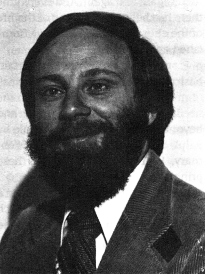
 A searchable, downloadable PDF of the original article appears below. J.H. (Hans) Kouwenberg is minister of St. Giles Church, Prince George, B.C., and editor of Channels. This article serves as an introduction to the Renewal Day, November 1, 1986, at Chedoke Church in Hamilton, Ontario. The theme of the day is “Growing Together in Truth and Love: Small Groups Renewing My Church.” The speaker is Hans Kouwenberg.
Jim Wallis, founder and pastor-teacher of an internationally-known intentional community of Christians who live in Washington, D.C., called Sojourners Fellowship, has accurately said that “the greatest need in our time” for the church “is not simply for kerygma, the preaching of the gospel, nor for diakonia, service on behalf of justice, nor for charisma, the experiencing of the Spirit’s gifts, nor even for propheteia, the challenging of the king (or government). The greatest need of our time is for koinonia (community), the call to simply be the church – to love one another and to offer our life (to each other) for the sake of the world. The creation of living, breathing, loving communities of faith at the local church level is the foundation of all the other answers” (Sojourners, January, 1980, p. 11).
Wallis goes on to repeat that “Proclamation of the gospel, charismatic gifts, social action, and prophetic witness alone do not finally offer a real threat to the world as it is [complacent, conforming, and spiritually lukewarm). . . It is the ongoing life of a community of faith which incarnates a whole new order that issues a basic challenge to the world as it is and offers a visible and concrete alternative. The church must be called to be the church, to rebuild the kind of community that gives substance to the claims of faith.”
“The message of the gospel is that Jesus Christ wants to live his life in us. Christ is made present in ordinary men and women. God intends to reproduce the incarnation in the world through a people – a people who have been called out of the world, called into relationship with God and to one another, and then sent back into the world” (p. 11).
Now, many Christian people today believe that, short of living together in communal community, this community life of Jesus Christ can best be found in small groups. Alongside the periodic gathering of the larger group of the whole church for worship and nurture, fun and fellowship and planning for ministry and mission, small groups can be the real centres of intentional, face-to-face, community building – discovering the more informal worship and study, support and sharing, strategy and action which we, and others, so desperately need.
The search for real community is our culture’s deepest longing and the Christian faith’s greatest promise. We live in an age where we all suffer from the unnatural breakdown of networks. We have moved from the extended family to the so-called “nuclear” family and to the single parent family. We gather around the notes left on the refrigerator instead of the family dinner table. Or, we gather around the T.V. and the video machine. We no longer ask questions of each other that help us to share. We have lost the art of conversation. When asked “what is the most important social reality in our lives?” or “where is the place, what is the group of people we feel most dependent upon for survival?”, very seldom today do folk respond that this is found in the family or the church. More likely it is the workplace or some other economic livelihood, personal advancement or social influence that is most important to us. Income production is more important than developing relationships. It is not so much who we know as how much we make. Our neighbourhoods are no longer our centres of activity. We don’t know each other. People live “closed off’ from each other. There is little opportunity to relate. And we “drive around” the uncomfortable areas, literally, socially, and emotionally. The world is becoming a scarier place to live in. We are afraid and anxious. There is an unconscious sense of ambivalence and self-protection that is growing among people. We are more and more alone.
There is the issue of loyalty: who and what do I belong to? Is it only the ones who pay the highest price or, who meet my needs? Who cares for me and who can I care for? There is the issue of rapid change: how can I retain a sense of rootedness and yet adjust and be renewed? There is the issue of fragmentation: there used to be a connection between work, home, school and church. I used to know two or three people who were the same folk who I met again and again in each group setting. Now we have people in the same family going off to different workplaces, schools, and churches. And we are known as different people by different people in each of these places! How do I develop an identity which is the same everywhere? I need to be connected to deal with these disconnections.
The church is called to be a community of loving connections. In spite of its historical tendencies towards “institutionalism”, it is called again and again by the original biblical witness to be a “household” of faith, hope and love, a “house” of prayer. Unfortunately it is not always so. It too has become a place of “consumerism”: folk “shopping around” to meet their needs or to get the best performance. Its structures are not always geared to develop real community. We spend a lot of time keeping the institute going at the expense of the priority of building relationships. Especially the bigger the church, the more this is true; small churches have the problem of locked-in traditions. There is also the problem of coping with the problem of privatized faith: “I have my own relationship with God and I come to church to develop this alone.” A good question for thoughtful Christians to struggle with is: “In what ways is ‘faith’ a community rather than a personal concern?” Moreover our culture has sought, somewhat successfully, to influence the church into being an agent of socialization rather than transformation. We do not expect the church to do too much for us anymore. Of course, we want it to be there when we need it, but we do not need it too much. And finally, when we do want the church, we want it to be ‘wonderful’ and the pastor ‘perfect’; we have a problem when we see the church in all its brokenness and humanness. “Look at all the hypocrites in the church.” And “when the church gets personal and asks me to share my struggles and feelings as well as my attendance and money I back off.” We long for community and yet we do not know how to find it where it may most likely be found or rediscovered.
Thankfully, more and more is being written about the church as community and small groups as a visible expression of this great need. The Old and New Testament and, especially for Christians, the history of the early church, are written within the context of community and small groups. Seldom do we read of a person acting alone. He or she is set in fellowship; he or she acts in fellowship; he or she is disciplined in fellowship. The gospel is communicated in fellowship and the message of the gospel becomes incarnate in fellowship.
There are the twelve together – the ideal maximum number for a small group! Within the twelve are the three: Peter, James, and John. Even our Lord is seen primarily in community. He may be found alone in prayer, but in the last hours of Gethsemane prayer, he asked a few of his closest friends to be with him. And after his death, the remnant of the twelve were drawn together in their despair. The Book of Acts begins with a report of small group experiences. Chapter 1 tells of three distinct group situations: the eleven, then the eleven together with the women and Mary and Jesus’ brothers, and finally a gathering of 120. The Pentecost experience of Acts 2 was a group experience. And the result of this invasion of the Holy Spirit was the Christian commune where they “spent their time in learning from the apostles, taking part in the fellowship, and sharing in the fellowship meals and the prayers” (Acts 2:42). Even Paul could not remain a solitary figure. It is Paul and Barnabas, Paul and Silas, Paul and Timothy. He travels also with Luke. His prison confinements read like a series of small group meetings. And everywhere he travels, he brings together people into small Christian communities. There were many small “house” groups long before there were cathedrals!
The life of the early church was nourished in homes, places where small groups usually meet. First it was built through what was then extended family life; second it was fed through koinonia groups, cells of people who met together for study, mutual encouragement, fellowship, worship, including communion and prayer. The Acts of the Apostles and other epistles of the New Testament refer to these kinds of meetings and to the church as having essentially a “house” or “household” of faith and encouragement focus again and again. And every time there has been a deepening of the life of the church such groups have flourished again and again.
From such a brief survey certain basic principles are clear which speak to my own need and hopefully to the needs of the church of the 1980’s and beyond. (I am grateful to an article by Ralph E. Osborne, Faith/At/Work, February, 1972, pp. 8-9, outlining these principles.)
1. Within the larger church I need a smaller unit of community within which I can grow in an understanding of the Christian faith itself and its ever-widening implications.
The small group of Acts 2 “spent their time in learning from the apostles” (2:42). The warning in Hebrews 10 was “not” to “give up the habit of meeting together, as some are doing” (presumably in small groups and for study as well as for “encouragement”).
Never before in history has so much excellent printed material been available in non-technical language to help the ordinary layperson grow in his or her grasp of Christian truth. But I need more than an invitation to study; I need the discipline of study, the challenge of another’s interpretation, and the insights of another’s personal experience.
Over the years, I have read most, understood most, and applied most when I have studied the Scripture or a helpful book in company with eight or ten others who shared an intellectual and spiritual quest with me.
2. I need a small group with whom I can met regularly to rub me up against different personalities, different understandings of God and his plan, different ways of life, and different priorities and persuasions.
I am basically parochial. I like to be with people who think as I do, use the same idioms as I use, who share with me common interests, common enthusiasms, common patterns of doing things. To a degree we are all caught in this limitation. We tend to seek out our own kind.
But the grandeur and wisdom of God is seen, in part, by his astounding interest in diversity. He has made us male and female; curly-haired, straighthaired, and no-haired; musicians and artists and cooks; at home with words or numbers, with trees or machinery; deep bassos or high tenors, or higher sopranos. God seems more interested in our dissimilarities than in our agreements. He seems more pleased when we live in creative tension than when we arrive at some bland consensus.
I need those with whom I am in disagreement. I need my ideas challenged, my secure little theological world shaken, my basic assumptions questioned. That’s why I want from time to time to live with a handful of people whose only common denominator is that each belongs to, or wants to investigate belonging to, Jesus Christ.
3. A third function of a small group is to provide a place where I must be accountable.
If you know yourself well, you will understand me when I say that I am not always trustworthy. My performance often lags behind my intentions. There are books I have set for myself to read that I have never read. I thoroughly intended to take my son out camping for an overnighter this summer (as I hope to do every year) but demands on my time made it impossible to do. Last week I promised God a certain daily discipline, and I did not remember my promise until three days later.
People like me need a small group of faithful friends who will hold them to whatever they understand God’s orders to be. For a lazy person it may be in the direction of disciplined use of time and productive labour. For the work-oriented person it could be to take a regular walk in the woods and getting away from the desk or worktable for a period of reading or meditation. It may be that I am being nudged to a different profession or to become involved in a particular ministry, or to give a large gift to a particular need.
Whatever my orders are from God (and he continues to give them as long as I am willing to respond), I had better be in deep and continuing fellowship with those who can help me understand what orders are mine and who will hold me to obedience.
While on a course on “Building Community Through Small Groups”, the five other ministers with whom I met regularly each day for the two weeks’ duration met for a day of “reporting in”. As we sat in a circle, a watch was passed around. Each of us was given 20 minutes to report on three areas: How are things going in your family? What are you doing with your finances? What are you doing with your ministry? After all of us had been heard out, we then had to report any new areas or directions in which we sensed God’s leading. As we spoke, we did so in the knowledge that we would later report back to each other (in the next week of the course and later, if we wanted – by letter) as to what we had planned or done. Even in that intense two weeks (and somewhat artificial situation) we knew that we were in each other’s prayers and that that would continue for some time after the course. Who knows? In your group someone’s love may result in a telephone call: “How is it going with what you sensed you were going to do?” Each of us needs folk to be accountable to.
4. We need encouragement and support, particularly when we have failed someone or failed in something.
The world does not deal kindly with “losers”, nor are some of us gentle with ourselves when we fail, particularly in the area of morals and ethics. We are much harder on ourselves than we would be on anybody else.
In such times of self-condemnation, we need help. We need the forgiving grace of Jesus Christ, not proclaimed from a pulpit in general terms, but unmistakably real and addressed to us personally. The gospel needs to have my name on it, as if addressed to me alone, and it must, search me out wherever I may have fled physically, emotionally or psychologically.
Love and forgiveness are communicated to me most effectively when they become incarnate in those who meet with me regularly in a small group for study, sharing, and prayer. If I drop out of a small group, I will be missed (where I may not be “in church”) and I will be sought out by those who care. Words of encouragement will not suffice, but love and forgiveness enacted incarnationally will break through all my defenses.
This is the primary function of a small group: to incarnate doctrine, to enact gospel, and to model community for the entire body of the church and the secular community as well.
5. I need a small group with whom I have shared “heart-and-soul-deep” so I can celebrate the marvellous acts of God together.
I’ll never forget the opportunity a number of us had in sharing the frustrations of a young couple who had made a bad business decision and who after weeks and months of struggle and litigation had finally been able to arrange an out-of-court settlement which lifted the load from their shoulders. It was agonizing but rewarding to be able to share with them their bittersweet load and liberation, as their pastor. But it was a small group which was their real strength and support. They literally gave out of their own pockets to help this couple and so they had a right to share in the way God moved to a successful solution to their dilemma.
Why do I need a small group? To study and grow together. To learn to work together with variety of viewpoints. To be held accountable. To be encouraged and supported. To share deeply: to sorrow and to celebrate together. Gareth Icenogle, Minister of Discipleship of Highland Park Presbyterian Church in Dallas, Texas listed some additional benefits of small groups in his Growth Groups manual. Small groups are: a place to discover and share the love of Jesus Christ; a place for spiritual growth, transformation, and renewal; a place for friendship; a place for strength in difficult times; a place to give and receive love; a place to serve others; a place to discover and use spiritual gifts; and a place to develop the ministry of the laity. Why do I need a small group? (And why may you need one too?) Because small groups have their roots in the origin of the church. Because small groups are a part of the tradition of the people of God – alive and gathered – for over 4,000 years. Because small groups have always been and are at the centre of the renewal of the Christian’s life and work. Because they can be a place of faith discovery about myself, others, and God in Jesus Christ. Because they can be a place of life transformation for myself and my friends. Because they can be a place where everybody knows my name (John White, “Everybody Here Knows My Name”, Eternity, September 1982, pp.26-27) and someone may care about me and because I may learn someone else’s name there and be able to care for them too.
For Further Reading and Resources
Although a small group may study just about any book, among the most profitable are books on community building, spiritual discipline, and basic Bible study. Several groups: Neighbourhood Bible Studies, Fisherman Bible Study Guides, InterVarsity’s “Lifebuilder” (new) Guides, Discover Your Bible Inc. (C.R.C. – coffee break evangelism guides), NavPress, and Lyman Coleman’s new “Serendipity” study guides offer good basic material with which to begin.
Especially helpful for leaders of small group Bible Studies may be:
- Roberta Hestenes, Using the Bible in Groups (Westminster Press, 1985).
- Gladys Hunt, You Can Start A Bible Study (Shaw Publishers, 1984).
- Marilyn Kunz and Catherine Schell, How to Start a Neighbourhood Bible Study (Dobbs Ferry, N.Y., 1966).
- Navigators, Howto Lead Small Group Bible Studies (NavPress, 1982).
- James Nyquist and Jack Kuhats- chek, Leading Bible Discussions revised edition: InterVarsity Press, 1985).
- Al Vandergriend and Neva Evenhouse, Evangelism Through Bible Discovery Groups (Discover Your Bible Inc., 1979).
- Oletta Wald, The Joy of Teaching Discovery Bible Study (second edition: Augsburg Press, 1975).
Also, a couple of excellent books on small group dynamics and components from a Christian perspective are:
- Em Griffin, Getting Together: A Guide for Good Groups (InterVarsity Press, 1982).
- Ron Nichols et al (written by a small group) Good Things Come in Small Groups (InterVarsity Press, 1985).