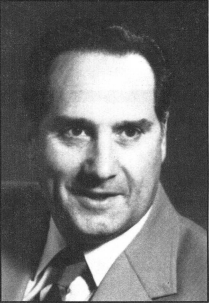
 A searchable, downloadable PDF of the original article appears below. Mariano Di Gangi has recently retired as senior minister of Knox (Spadina) Church, Toronto.
Most people live only in the present, as though the future and the past have no bearing on their lives. But, as some perceptive soul has said, “You can’t get to where you’re going unless you know where you’ve been.”
What follows is a retrospective regarding The Renewal Fellowship Within The Presbyterian Church in Canada, offered as a help in evaluating the past, understanding the present, and planning for the future. It is not my purpose to fan any flames of nostalgia for a mythical past, nor to stir up fear of an uncertain future, but to take a fresh look at how the Fellowship has been developing over the past decade.
The Fellowship did not, like Athena, spring full-grown from the head of Zeus. It had antecedents in ad hoc groups like The Reformation Fellowship of Canadian Presbyterians. Also, Channels had precedents in publications such as Presbyterian Comment and Foundations. What distinguishes the Renewal Fellowship and Channels, however, is the way in which they have survived and thrived over these ten years.
The Renewal Fellowship came into existence after a crisis in 1980: the refusal of East Toronto Presbytery to approve the ordination of Dan MacDougall because of his conscientious reservations over mandatory participation in the ordination of women – even though he was willing to cooperate with them in the Church’s life and work.
The situation was aggravated when the Presbytery of Montreal blocked the call of John Vaudry, a minister in good standing, to the Cote des Neiges Church for the same reason and as an act of discipline. (Spiritual discipline, like the faithful preaching of the Word and the proper administration of the sacraments, is a mark of the true Church. But isn’t it inconsistent to discipline someone on an administrative matter while declining to discipline others in the ministry who may be culpable of heresy or immorality?)
While these two developments served as catalysts, and protest gatherings were soon convened, the Fellowship that eventually emerged defined its areas of concern far more broadly. The inaugural meeting of the Fellowship took place in Willowdale Church, Toronto on May 8, 1982.
Each part of our name is significant:
The Renewal –
through radical repentance and grateful obedience, not mere resolutions or restructuring;
Fellowship –
aware of belonging to the family of God, the community of faith;
Within –
as an integral part of our denomination, following no schismatic course;
The Presbyterian –
committed to Reformed doctrine, worship and polity;
Church –
the body of Christ, in which we must serve as responsible members;
in Canada –
sharing a national/international perspective.
The Board of the Fellowship, and our first Annual Meeting held March 13, 1983 in Knox Church, Toronto, approved a statement originally presented in our nation’s capital: The Ottawa Declaration. It was forwarded to Dr. Wayne Smith, Moderator of the 108th General Assembly, with an open letter, and released as well to The Presbyterian Record. Virtually ignored by our denominational publication, the Declaration affirmed the unique headship of Christ over the Church, denounced all forms of sexist discrimination, encouraged male/female partnership to advance the cause of Christ, pledged responsible participation in the Church’s ministry, urged conciliation rather than confrontation, and pleaded for presbyters who faced a crisis of conscience caused by a conflict between ecclesiastical authority and personal convictions based on a tenable/traditional understanding of Scripture.
The Renewal Fellowship supported the nomination of the late Dr. Donald Corbett as Principal of Knox College in 1984, and sought to enter into meaningful dialogue with the boards and agencies of our denomination, with a view to joint sponsorship of seminars and conferences related to mutual concerns.
In addition to the Fellowship’s Annual Meetings, Renewal Days have been regularly held in several centers across Canada. Led by gifted men and women, these have focused on a variety of subjects such as: Christian leadership, church planting, overcoming resistance to change, obeying the evangelistic imperative, using spiritual gifts, starting neighbourhood Bible studies, and equipping members to function within the body of Christ. New ways of praise, in joyful celebration of God’s grace, have also been featured in Renewal Day programs.
Although contemporary issues have not been given a high profile lately, they have not gone unnoticed. From time to time, after careful study, position papers are prepared as a stimulus to further reflection by members of the Fellowship. These have included statements regarding inclusive language in worship, children at the Lord’s table, biblical inspiration and authority, the theology of mission, and the uniqueness of Christ in a pluralistic age.
How long will the Renewal Fellowship continue? As long as it discerns and meets real needs. Some of those have already been addressed, but still call for work no less than prayer.
When it comes to giving, some people stop at nothing! That certainly is not true of the Fellowship’s many friends, who have given generously to support its work over the years. But giving is more than a matter of money. It includes the faithful stewardship of time and skills. We gratefully remember those who have chaired the Fellowship”s Board in the past decade: A. Donald MacLeod, Nick Nicolle, David MacKenna, and now, Dal Schindell. Also deserving of honourable mention are those who have served as directors: Malcolm MacLean, John Vissers, and Robert Little. And what shall we say about Channels, produced quarterly since the autumn of 1983 by Hans Kouwenberg and his capable committee, or office secretaries Gerry Clemenger and Julia Mills?
Over 1,000 fellow-Presbyterians have affiliated with the Fellowship during our first decade. These include almost 200 ministers, women as well as men.
How long will the Renewal Fellowship continue? As long as it discerns and meets real needs. Some of these have already been addressed, but still call for work no less than prayer. But there are other areas of concern that will demand attention. Let’s face it. Many are fuzzy on the contents and relevance of the Bible, no matter how many “education wings” our churches sprout. The art of expository preaching is becoming increasingly scarce. The spread of the gospel is dismissed as an elective for an elite that likes that sort of thing, and overseas mission is thought of almost exclusively as development. The Judeo-Christian tradition, with its emphasis on moral law, is rapidly eroding under the attack of secular humanism and ethical relativism. These problems, however, provide us with opportunities to serve, and suggest a possible outline for the Fellowship’s direction in days ahead:
Christian education –
to enlarge the knowledge of Scripture and enhance the teaching skills of actual and prospective church school staff;
Authoritative exposition –
to assist ministers and theological students in their task of faithful and relevant proclamation of the Word;
Biblical evangelism –
to fulfill the Great Commission at home and abroad, by word and deed, not to inflate statistical returns but to commend Christ to others for their acceptance as Saviour and Lord;
Personal and social ethics –
to encourage the pursuit of compassion and justice in the social order, dealing with abortion, infanticide, euthanasia, refugees, racism, aboriginal rights, the restoration of the environment, human sexuality, family values, and other such issues as they arise.
By seminars and conferences, as well as publications and projects, we may complement or supplement other available resources for the well-being of individuals and congregations. Listening to the Spirit who speaks in the Scriptures, may we always speak the truth in love, aiming to build up the body of Christ as we live and labour together toward full maturity.