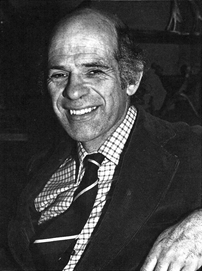
 A searchable, downloadable PDF of the original article appears below. Canon Green is Rector of St. Aldate’s Anglican Church, Oxford, England. This article is a chapter taken from Michael Green’s 1983 book, Freed to Serve, published by Hodder and Stoughton. Used by permission.
Did the early church follow up the ideals of service laid down by Jesus? Or were they overwhelmed by the patterns of leadership all round them in pagan society?
Ministry for all Christians
The New Testament gives no suggestion that one could possibly be a Christian without at the same time being called to some ministry within the church. The Christian is indeed ‘saved to serve’. St. Paul, for one, could never forget that the voice of the ascended Christ at his conversion had said: “Rise and stand upon your feet; for I have appeared to you for this purpose, to appoint you to serve and bear witness” (Acts 26; 16). It is hardly surprising, therefore, that the whole point of his argument in Romans 12 and 1 Corinthians 12 is that every member of the church has his or her part to play in the service of God. All without exception have a ministry.
Three words in particular are used to describe the devoted service of the person who knows himself to have been forgiven.
1. The first is doulos. It means, quite baldly, bondslave. And it comes a great many times in the New Testament. It was a word which Paul sometimes used to describe his relation to his converts (1 Cor. 9:19; 2 Cor. 4:5) but more often his relation to Jesus. He was ‘the bondslave of Jesus Christ’ (Rom. 1:1, etc.). He spoke of wearing the chain of the slave, of being branded with the marks of the slave (2 Tim. 1:16; Gal. 6:17). He saw wholehearted dedication to Jesus as the only possible reaction of the redeemed. “You are not your own; you were bought with a price,” he asserts (1 Cor. 6:19,20). Peter makes the same plea on the same grounds: “You know that you were ransomed . . . with the precious blood of Christ” (1 Pet. 1:18, 19), and he describes apostate Christians as “denying the master who bought them” (2 Pet. 2:1).
This metaphor of the slave was particularly telling in the first century. The Roman slave belonged entirely to his master. He had no rights in law, and could demand no privileges. His money, his time, his future, his marriage were all, strictly speaking, at the disposal of his master. That is what it meant to be a slave. And that is the image that the New Testament writers deliberately took over.
But it was not applied only to the apostles or the leadership. To be sure, they are included; and Paul and Peter, James and Jude delight to call themselves the bondslaves of Jesus (Jas. 1:1, Jude 1). But it is a characteristic description of all Christians without distinction (Rev. 1:1, 1 Pet. 2:16). Could anything show more graphically their loving devotion and total dedication to Christ? Should this not shame into silence our arguments about the status and validity of ministers? The highest ministry of all is open to all – to be bondslaves of Jesus Christ.
2. The second word used of Christian service is leitourgos, from which we get our word ‘liturgy’. If doulos speaks particularly of Christian devotion to Christ, leitourgos speaks of Christian worship of God. This is the word used of angels in heaven and men on earth when they worship the Lord and surrender themselves in loving adoration to him (Heb. 1:14; Luke 1:23; Acts 13:2).
Sometimes the Jewish background of the term is uppermost, as in the Epistle to the Hebrews, where it is made very clear that the Old Testament priestly offerings, though ineffectual in themselves, are filled with meaning when seen in the light of Christ’s work (Heb. 8:2, 10:11, 12).
On the other hand, Paul draws on the imagery of pagan worship when he calls the faith of the Philippians a ‘liturgy’ (Phil. 2:17). Christian giving is described in this way (2 Cor. 9:12; Rom. 15:27). It is the practical outworking of genuine worship of God. And for Epaphras to give himself, for the Lord’s sake, to the service of Paul was no less worthy of the name (Phil. 2:30). When Paul preaches the gospel to the heathen, this too is leitourgia (Rom. 15:16) because through it the converts are ‘offered’ to God. In short, this word speaks of the service of God in worship and work. It is brought before us as the right and duty of every Christian (even, in Romans 13:6, of a pagan magistrate exercising his responsibilities dutifully). In no way is it something which is restricted or delegated to any one class within the church.
3. The third and most common word to describe a minister is diakonos, from which our word ‘deacon’ is It is, like the other two, applied to all and sundry within the church. Jesus and the apostles are called by this name: so are the humblest believers. It refers particularly to service of others, often menial service at that. The varieties of such service are vast. In Acts 6, for instance, the apostles were ministering the word of God to the people and the seven were administering famine relief. Both are styled diakonia (Acts 6:1-4). The New Testament does not follow our false distinction between the sacred and the secular. The whole of life is hallowed by God’s creation, Christ’s incarnation, and our conscious offering of all we do to him. The early church was well aware that it was called to carry on the work of the Servant.
We find the word diakonia used in 1 Corinthians 16:15 of what we would call church work. It is no less appropriate to the personal service rendered by Timothy and Erastus to Paul (Acts 19:22) – including, no doubt, taking down his letters, washing his clothes and cooking his meals. Prison visiting is given this honourable title in Philemon 13, and so is evangelistic preaching in Acts 20:24. Indeed, glancing through the Acts alone, you see the breadth of this term. It is applied to the ministry of feeding hungry people (Acts 6:1); the ministry of teaching hungry minds (Acts 6:4); the ministry of prayer (Acts 6:4); the ministry of giving to Christians in need in another country (Acts 11:29); the ministry of evangelism (Acts 21:19); the ministry of humble assistance as and when required (Acts 19:22); the ministry of living the whole of life for Christ even in the face of suffering and hardship (Acts 20:24). Diakonia, in short, belonged to the whole church and to every member of it. No service was regarded as too menial or exacting if it would commend the gospel of the grace of God.
Emil Brunner put it succinctly:
One thing is supremely important; that all minister, and that nowhere is to be perceived a separation, or even merely a distinction, between those who do and those who do not minister, between the active and the passive members of the body, between those who give and those who receive. There exists in the Ecclesia a universal duty and right of service, a universal readiness to serve, and at the same time the greatest possible differentiation of functions.
Specialized ministries for some Christians
The fact that service is the hallmark of all Christians does not dispense with the need for specialization within the Christian community. St. Paul sees the church as the Body of Christ, that is to say the agent of his purposes and bearer of his life in the world. Christians are like members within the human body; they have different functions, offer different types of service to the whole body, and are alike under the unified direction of the head.
Romans 12:4-8 urges Christians to discover and make the most of their God-given abilities for the good of the whole. Paul mentions the charismata (love-gifts from God) of prophecy, helpful service, teaching, encouragement, giving leadership and pastoral concern as examples of what he means; and love is the bond which unites these diverse gifts into the harmonious unity of the Body. The function of leadership within the church is just one of the many gifts of God to his people.
First Corinthians 12 uses the same metaphor, and makes the added point that this differentiation of function within the Body is a sovereign act of God the holy Trinity (vv. 4-6). The church is seen as a living organism in which God gives different tasks for each member to embody. They are pneumatica, functions assigned by the Holy Spirit. They are charismata, gracious enduements by God for service. They are energemata, a word which suggests the power in which these gifts are to be exercised. They are diahortiai, different types of service to and in the Body. Paul concludes the chapter by applying all this to a variety of ministries within the Corinthian church. They fall roughly into four groupings: ministry of the word (“first apostles, second prophets, third teachers”); ministry of healing (“then workers of miracles, then healers”); ministry of leadership and administration (“helpers, helmsmen” – what a superbly illuminating title for Christian leadership!); and finally the ministry the Corinthians (wrongly) prized the most, “speakers in various kinds of tongues” and their interpretation. God’s purpose is that by mutual caring each member should use his gift for the good of the whole Body.
Ephesians 4:8-11 underlines this theme. Paul is speaking of the gifts of the ascended Christ to his church: “and his gifts were that some should be apostles, some prophets, some evangelists, some pastors and teachers, for the equipment of the saints for the work of ministry, for building up the body of Christ.” That is a lovely description of the leaders of a church. They do not lord it over the congregation. They are not hired and fired at the whim of the congregation. They are a team. They are the farewell gift of the ascended Christ to that congregation, and their special task is to build up the members for their work of service.
It can hardly be accidental that each of the ministries mentioned here is a ministry of the word. They exist within the Body to equip the church to play its part in the world.
In his book Let My People Grow Michael Harper has given considerable care to studying these five ministries of apostle, prophet, evangelist, shepherd and teacher. He argues most convincingly that all five represent facets of ministry in any healthy church.
We need the apostolic deposit in scripture and the circulating, supervising role which is now embodied in bishops and travelling teachers.
Equally we need the prophetic ministry. It belonged to the foundation layer of the church (Eph. 2:20; 3:5) and it has not died out. God still guides his people through prophecy, that is, a word from himself directly applicable to the situation of that church. As early as the Didache at the end of the first century it was necessary to test prophecy carefully: credulity is no Christian virtue. Thus “No prophet who orders a meal while ‘in the Spirit’ shall eat of it; otherwise he is a false prophet” (11.7). Very shrewd advice! But nonetheless the Didache has the highest respect for the genuine prophet. Abuse does not abolish use, and one of the crying needs in the contemporary church is the recovery of the prophetic gift.
Every church needs evangelists. These may or may not be ordained people. It is the gift that is needed, not the ordination! A church that does not evangelize will slowly die. And if it has nobody in it with an evangelistic gift, that aspect of its ministry to the world around is likely to atrophy. All Christians are called to witness to Christ. But some Christians have a special gift of evangelism, and this gift is to be valued and used in the congregation.
Pastors are no less vital. People need caring for. Troubles need to be spilled out and problems shared. In every congregation there are those who have gifts in this direction. They constitute a priceless part of the leadership of the church, an invaluable gift from the ascended Christ for the benefit of his Body.
Finally, teachers are indispensable. Probably these are the same as the “teachers” of 1 Corinthians 12:28 and the presbyter-bishops of Acts 20 and the Pastoral Epistles: in both places great emphasis is placed on their teaching the word of God (Acts 20:24-32, 1 Tim. 3:2, Titus 1:9). This teaching function, we are told (Eph. 4:11,12) is the supreme task of what we would called the ordained ministry, that is the part of the Body expressly charged with the duty of equipping the “saints” for their service in the world.
Now surely this is a very remarkable thing. We tend to assume today that the purpose of the clergy is primarily to do with leading public worship and celebrating the sacraments. These functions are never once attributed to the ordained ministry in the New Testament! The ministry there is first and foremost concerned with didache, the teaching of Christians so that they may more effectively be the church in the world. That is to say, ministry exists for the sake of the church (and not vice versa, as is so often either taught or implied), just as the church in her turn exists for the sake of the world. The pattern of the Servant remains.
Clergy and laity?
One of the most firmly held assumptions in any of the mainline churches is that there is a clear distinction between clergy or ministers and laymen. Christianity is like a train with two classes of passenger in it. The clergy are the first-class passengers in this particular train. They are the professionals, and the laymen the amateurs; they are the priests, and the laymen the people.
All this would have sounded very strange to New Testament ears. They knew nothing of any such distinction! And this is all the more amazing when you recall that every society in the world, including Israel, and its specialized holy seasons, holy places and holy people. In Christianity all three were abolished – or rather universalized. The keeping of holy days was a matter of indifference to the early Christians (Rom. 14:5,6). They had no holy buildings, but met in private houses (e.g. Rom. 16:23): the incarnation had made the secular sacred. As to holy people, why, all believers were called to be that holy people, that universal priesthood envisaged long ago in the Old Testament but never hitherto realized (1 Pet. 2:5). The mediation of Jesus had abolished the need for an intermediary caste of priests. All can have access to God by virtue of his sacrifice. All are charged with the priestly responsibility of interceding for men to God. There is no priestly body within Christianity. It is a one- class society, though you would never guess as much, so grossly has conformity to pagan and Old Testament models distorted this unique facet of Christ’s community. Although not all men are called to the function of Christian leadership, the church remains a one-class society. There is no suggestion to be found within the New Testament of what subsequently developed into the disastrous two-class system of clergy and laity.
The etymology of the two words is interesting and their usage suggestive. Clergy derives from hleros, God’s lot or heritage. Laity comes from laos. the people of God. These words are not contrasted in the New Testament. All Christians constitute God’s kleros (Acts 26:18: Col. 1:12 and supremely 1 Peter 5:3 where the word is used of what we would call the laity!). All Christians, equally, go to make up God’s laos (2 Cor. 6:16: 1 Pet. 2:9, 10). Just as the distinction between those who do and those who do not minister is abolished in Christ, so is the age-old divide between the professional man of God and the amateur, the cleric and the layman. The church belongs to the new age, the age of the kingdom of God, in which distinctions of status are done away with. So in the New Testament you do not find two standards of behaviour, one for the specially holy professional people and one for the ordinary Christians. The New Testament knows nothing of a priestly caste within the church. As J. B. Lightfoot put it in his celebrated Essay on The Christian Ministry “the Christian ideal is a holy season extending the whole year round, a temple confined only by the limits of the habitable world, and a priesthood coextensive with the human race.” Of course, the early Christians did not for that reason forego efficiency and organization. To be sure, certain people generally led the services, which normally took place in this or that house. But this did not compromise the principle of the one-class society. Hear Lightfoot again:
For communicating instruction and for preserving public order, for conducting public worship and dispensing social charities, it became necessary to appoint special officers. They are called stewards of God. servants or ministers of the church, and the like: but the sacerdotal title is never once conferred upon them. The only priests under the gospel, designated as such in the New Testament, are the saints, the members of the Christian brotherhood (1 Pet. 2:5,9; Rev. 1:6; 5:10; 20:6).
That is why there is no hard and fast distinction between clergy and laymen in the New Testament. All alike are the servants and ministers of God. The New Testament offers us a churchful of ministers!