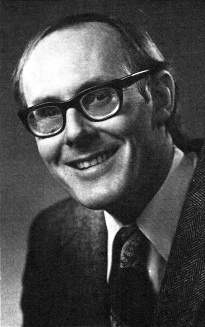
 A searchable, downloadable PDF of the original article appears below. Clark H. Pinnock is Professor of Theology, McMaster Divinity College, Hamilton, Ontario.
Our churches need to be renewed in the Spirit of God in order to be able to be what God intends them to be. If it were just to attain a euphoric spiritual high, seeking renewal would just be another form of selfism in line with the narcissistic mood of the 80’s. But it is not a selfish desire on our part. Our concern is that the church cannot fulfill the call and command of God to be the people of God unless it is vital. If it is lethargic, it will be unable to praise God or spread the gospel or fulfill its ministry. But if it is alive unto God, if it pulses with the life of God, the church will be empowered to break out of mediocrity and move forward in effective mission. Churches need spiritual renewal precisely to be churches.
What is spiritual renewal? Spiritual renewal is a condition in the body of Christ when God is experienced by the people and by outsiders as well as being very near and active. It is a state of spiritual health in which the body manifests certain vital signs such as the desire to praise God, the strong expectation that God is about to answer prayer, a natural inclination to want to share the Good News, a desire to please and obey God. The church in the book of Acts was healthy in these ways, and a church today can experience the same reality if it is open to God.
What is at stake here? Let me enumerate some ways in which spiritual vitality is obviously critical to the effectiveness of a congregation. First and foremost, the congregation has been formed by God to be a temple for the indwelling Spirit (Eph. 2:19-22, 1 Peter 2:4-6). This means that the local church is supposed to be a company of priests, making up God’s house, and ministering to Him. They offer up spiritual sacrifices of praise to God and extol His blessed name. The Spirit, when poured out upon people, always causes them to want to declare His greatness. On the day of Pentecost itself, onlookers heard the disciples “telling in their own tongues the mighty works of God” (Acts 2:11). When the Spirit fell upon Cornelius and his friends, people heard them “speaking in tongues and extolling God” (10:46). The Spirit makes people want to magnify the Lord and rejoice in God our Saviour. Praise is a kind of litmus test of renewal: if Christians love to praise their God, you know that the lifegiving Spirit is present – if they are reluctant to praise God from their hearts, you know there is a problem.
Second, orthodoxy in the New Testament is vital and not just intellectual. Believing the right things was very important, make no mistake about that. But believing them in the heart as well as in the head was very important too. Consider the fact that Paul, after he had penned that marvelous doctrinal passage about the triune God in the work of redemption, turned immediately to prayer in order to ask God to help the people to appropriate the truth experientially. He desired God to give them “a spirit of wisdom and revelation in the knowledge of him” and to open their eyes to the richness of their inheritance and to the power at work within them (Eph. 1:15-23). It was not sufficient to know the doctrines and to assent to them – it was essential also to know the truth of them spiritually and personally. God chose me in Christ! Christ shed His blood for my sins! The Spirit has sealed my heart unto everlasting life! Praise the name of God! We face a tremendous battle today with heresy. Leading theologians openly advocate revising the faith to bring it into line with secular thinking. In this context orthodox Christians are driven to stand up for the faith and to guard the gospel. But may we not forget the importance of experiencing as well as confessing our true apostolic faith.
Third, we are not doing such a great job in Canada today reaching and converting unsaved people. There is a ‘circulation of saints’ among churches, and the flow is benefitting conservative churches most, but we are not reaching people of other religions or of none very well. If we look at the early church, I do not think we can account for its effectiveness on the basis of techniques or thought-out theory. Their basic secret of success, if we may call it that, was the overflow principle. The early Christians had such an overwhelming experience of the power and love of God that they overcame their shyness in speaking about God and shared with everyone who would listen out of the fullness of their hearts. I think the most important factor in reaching people for Christ is the quality of our corporate life in Him. If the church is caught up in the praise and love of God because the Spirit is free among them, unbelievers will be attracted to the light. There is a magnetism to a renewed church. Where there is the life of God, Christians will want to share and nonbelievers will often want to listen.
If the church is caught up in the praise and love of God because the Spirit is free among them, unbelievers will be attracted to the light.
Fourth, in order to enable the church to do its work, God equipped the body of Christ with spiritual gifts. It is thus shaped not by a hierarchical clerical structure so much as by a gift structure. In every believer the Spirit manifests His presence (1 Cor. 12:7). But there is a problem here. Many Christians are poorly informed about the gift-possibilities and inadequately exercised in using them. They are far too dependent upon the pastor who alone appears to have gift privileges. Now this clerical system which suppresses gifts among the people is unscriptural and must be changed. Not that there is no place for the minister, but rather that the super-star pastor idea is untrue and harmful both to pastor and to people. When we begin to correct that problem we might as well face up to a related problem. People have gotten the idea that even when they are open to gifts they should not be open to certain gifts. They instinctively feel, due to our Reformation traditions, that healing, prophecy, tongues, miracles and such like are somehow not to be expected and when they occur today occur among odd people like Pentecostals. I think it is time for us to stop denying the Bible and stop quenching the Spirit. These gifts are plainly offered to the body of Christ in the New Testament and we will have to answer for it if we try to censor what God has given. How can we expect the church to function properly when we are not treating seriously the charismatic structure of the congregation?
Fifth, the church has a social function to perform too. We have been called to have dominion over God’s earth and to claim the creation for Christ. I am not suggesting, of course, that we imitate the trendy clerics of our day who like to sanctify the latest revolution and sing its praises. But I would insist that God has given us a cultural mandate to perform which involves introducing righteousness into society. I do not have to lecture followers of John Calvin about that – we all learned it chiefly from him. Now my point is this: if we are going to have a hope of getting Canada back on track as far as God’s righteousness is concerned, then it is going to require a very great deal of effort and commitment, and we are not going to be able to count on effort and commitment unless and until the churches are alive unto God! Nominal Christians are not going to turn Canada right side up. They cannot walk in the Spirit if they are not alive in the Spirit. God gave His Spirit to facilitate the coming of the kingdom and to empower people to do on earth His will as it is done in heaven. God’s people will only be able to do that and be a people zealous for good works if they are filled with the Spirit of God.
What has to happen then? How can we experience the fresh touch of God? An easy answer may not seem to be enough. Paul says bluntly: “Do not get drunk with wine but be filled with the Spirit” (Eph. 5:18). Surely that is the answer, but how does it work?
If we look to the New Testament, it seems as if God flooded people’s lives so that they received power, experienced God’s love, tasted God’s goodness, and sang the praises of the Lord. They did not seem to do anything other than open themselves to God and ask to be filled. My experience is that it is as simple as that. Our problem is barriers to simply yielding to the Spirit. We are afraid of what might happen, of what people will think. We do not want to lose control of our ordered lives. We are scared of having to cope with anything unpredictable. We want to check the whole thing out intellectually before we lower our defenses. In short, we do not have much faith in God, and we languish in a miserable state of half-empty cups and try to rationalize why nothing is happening.
My suggestion would be to join together in prayer with people who have experienced the fresh touch of God, be they Catholics or Pentecostals or Baptists, and whatever. My impression is that spiritual vitality is much more likely caught than taught, and that God uses people filled with His Spirit to help other people enter into the same state. Of course God can invade your life alone in your room. But if he has not done that, then why not follow my suggestion and seek out some sisters and brothers (at night, if you must) and ask them for help? Maybe you are too proud to do that. Like Naaman the Syrian leper, why should you bathe in that dirty river Jordan? There are far nicer and cleaner rivers back home. Well, you have to make up your mind. It may require that you humble yourself before God will bless you. After all, the Scriptures say, God dwells with those with a humble spirit.
It is a marvelous day to be a Christian! Thousands around the world are experiencing a fresh touch of God. May it be that here in Canada our churches in every denomination will make the decision to enter into the full meaning of what it means to be a creation of the Spirit. When that happens, as I believe and pray it will, we will explode in mission outward and be in a position to claim our country for God. Then truly Christ will reign ‘from sea to sea and from the river to the ends of the earth.’